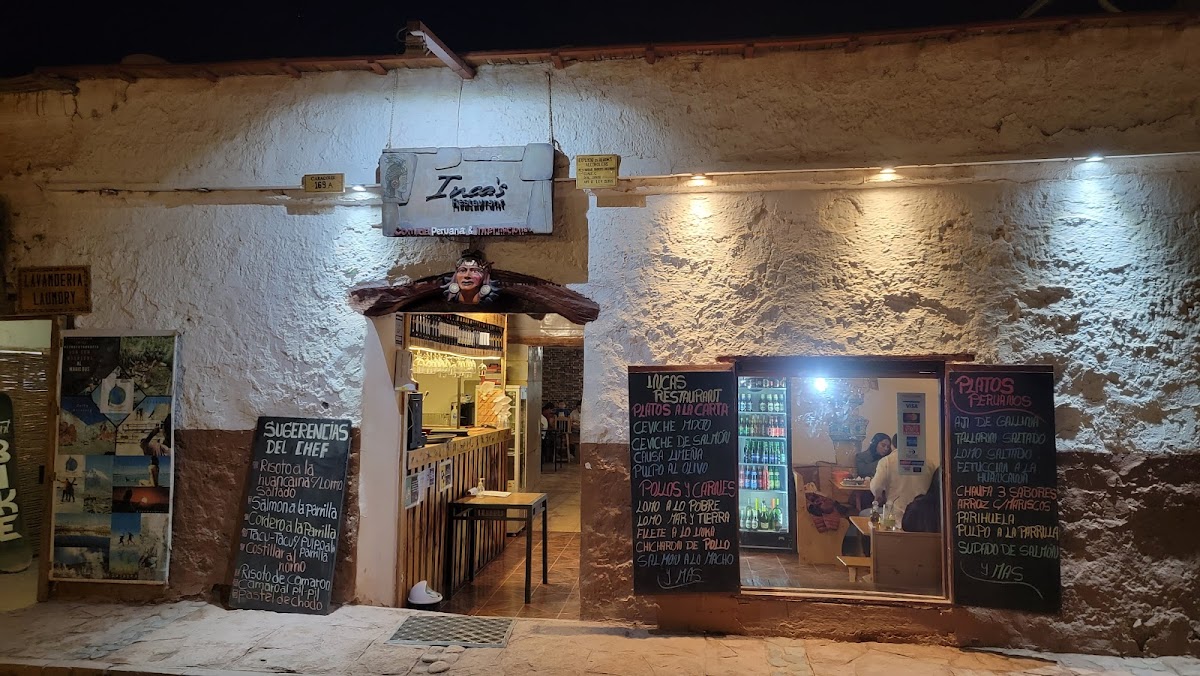
When you see this place, it’s interior is rather unassuming and your expectations are modest. But once they bring out the food, one will be very pleasantly surprised with both the size of portions as well as the flavor. Highly recommend.
Overview
Walking down Caracoles 169, A, 1410000 San Pedro de Atacama, Antofagasta, Chile, it’s hard to miss Inca's Restaurant, especially after a long day exploring geysers, salt flats, or high-altitude lagoons. I first ate here after a sunrise tour to El Tatio, exhausted, dusty, and starving. What stood out immediately wasn’t just the food, but how grounded and welcoming the place felt, like a diner that actually understands travelers.
The menu leans heavily into Andean and Chilean comfort food, with a few Peruvian-inspired touches that make sense given the regional overlap. One server explained how their lomo saltado follows a traditional method: high-heat sautéing to keep the beef tender while locking in juices, then finishing with onions and tomatoes added late so they stay crisp. That detail tracks with culinary guidelines published by the Peruvian Gastronomy Society, which emphasizes heat control as the backbone of the dish. The result here is balanced and filling without being heavy, which matters at altitude.
During another visit, I watched a couple from Germany debate the quinoa options, and the server broke down the difference between local white quinoa and imported varieties. Quinoa grown in northern Chile has slightly higher protein density, according to data from the FAO, and it’s noticeable in texture. Their quinoa stew had a nutty bite and didn’t dissolve into mush, which tells you the kitchen knows what it’s doing.
This diner-style restaurant keeps portions generous, something many reviews mention, especially from hikers and tour guides who stop by between excursions. A local guide I spoke with said he eats here three times a week because the meals are consistent and predictable, which is exactly what you want when working long days in extreme conditions. Consistency is often overlooked, yet food safety research from the World Health Organization shows that standardized preparation processes significantly reduce variability in both quality and hygiene, something Inca’s seems to apply well.
The location is another strength. Being right on Caracoles makes it easy to reach from most hostels and hotels, and the casual layout means solo travelers don’t feel awkward dining alone. I’ve seen laptops open, families sharing plates, and dusty backpackers inhaling empanadas without judgment. That flexibility matters in a town built around transient visitors.
Reviews frequently highlight the soups, especially after sunset when desert temperatures drop fast. There’s a practical reason for that. Warm, sodium-balanced meals help mitigate altitude fatigue, according to studies published by the International Society for Mountain Medicine. Whether the kitchen planned for that or learned through experience, the effect is real. After a bowl of their caldo-style soup, I genuinely felt steadier and more alert.
The staff deserves mention too. On one visit, a power outage hit the street, and instead of shutting down, they simplified the menu and kept serving. That kind of adaptability speaks to experience, not improvisation. It reminded me of small diners in remote parts of Patagonia, where restaurants operate with the assumption that things will go wrong and plan accordingly.
There are limits worth acknowledging. If you’re looking for fine dining presentation or experimental cuisine, this isn’t the place. The focus is nourishment, familiarity, and value. Also, peak hours can mean a short wait, especially during high tourist season, though turnover is fast.
Overall, the restaurant works because it understands its environment, its guests, and its food. It’s not trying to impress; it’s trying to feed you well, and that’s why so many travelers circle back before leaving San Pedro de Atacama.
Good to know
Service options
✓ Delivery ✓ Takeaway ✓ Dine-inHighlights
✓ Great beer selection ✓ Great cocktails ✓ Great dessertPopular for
✓ Lunch ✓ Dinner ✓ Solo diningAccessibility
✓ Wheelchair-accessible seatingOfferings
✓ Alcohol ✓ Beer ✓ Cocktails ✓ Coffee ✓ Small plates ✓ Spirits ✓ WineDining options
✓ Lunch ✓ Dinner ✓ Dessert ✓ Table serviceAmenities
✓ Bar on site ✓ ToiletAtmosphere
✓ Casual ✓ Cosy ✓ Quiet ✓ TrendyCrowd
✓ Groups ✓ TouristsPlanning
✓ Accepts reservationsPayments
✓ Credit cards ✓ Debit cards ✓ NFC mobile paymentsChildren
✓ Good for kidsParking
✓ Free of charge street parking ✓ ParkingPhotos
1 / 4
Location
Reviews
- No ratings yet 514 reviews
Excellent pisco sours. The mixed ceviche was fantastic and the portions were very generous.
Big portions so order to share. Food was great except for the grilled octopus. Food came all at one time with our starters.
Ceviche (prawn and salmon) and the mixed ceviche were brilliant! The lomo saltado was nice but the beef was a little bit overcooked. The marina trio was average - the fried fish wasn’t great. The servers were absolutely lovely and very accommodating!
Quick dinner at NYE once we arrived in San Pedro. Although there was a set menu, we were positively surprised by the taste of the food and the quality! Recommended
We started with the mixed ceviche which was excellent - very tasty and fresh! We ordered two steak dishes. One was cooked v nicely and came with a lovely sauce, the other was unfortunately over cooked. The staff were very nice and attentive. Definitely worth visiting in San Pedro if your like Peruvian food!
Had salmon&Shrimp ceviche which was the best i had in chile so far (out of 5 times). We went to this restaurant twice because it offers really high quality food and fresh juices for a reasonable price. My girlfriend is a vegetarian. She ate pasta with fresh pesto and the pesto was really rich in flavour, probably homemade. My favourite restaurant in San Pedro for sure!